How to prepare your gutters for Indianapolis winter
Indianapolis winters bring snow, freezing nights, and melt-refreeze cycles at the eave. Here is how to prepare gutters before freezing weather, using National Weather Service normals.
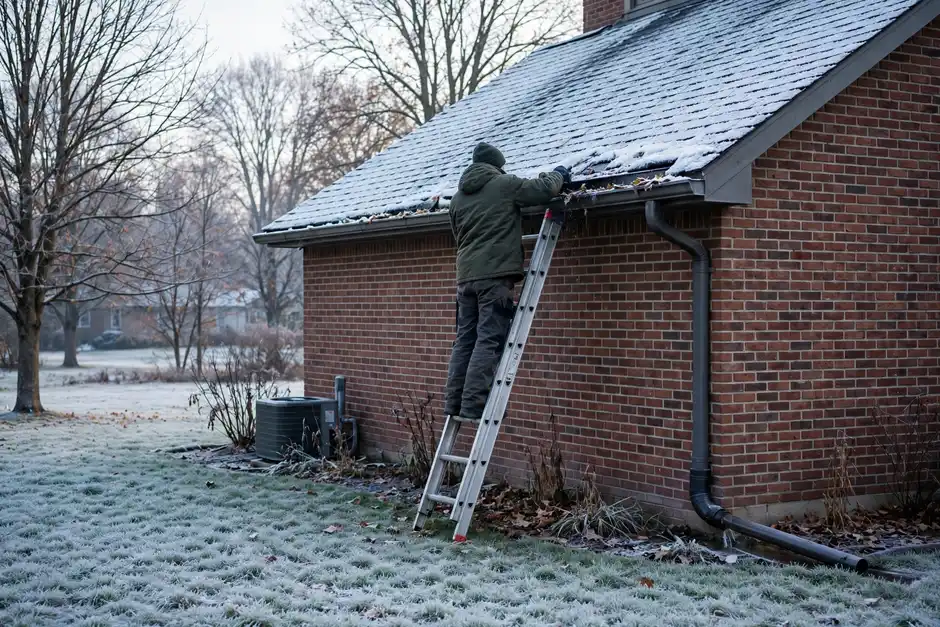
Preparing gutters for Indianapolis winter is mostly about one thing: making sure gutters and downspouts are clear before freezing weather arrives, so meltwater can leave the roof instead of sitting at the eave. The climate figures on this page come only from National Weather Service 1991–2020 normals for Indianapolis International Airport: 43.63 inches of annual precipitation, 25.5 inches of annual snowfall, an average first freeze on October 26, and an average last freeze on April 17.
Why Indianapolis winters are hard on gutters
Snowfall concentrates in December through February, which together average 21.2 inches — about 83% of the annual 25.5 inches. January is the coldest month, with an average high of 36.1 degrees and an average low of 20.9 degrees. Shoulder-season nights cool toward freezing: October nights average 45.5 degrees, November nights 34.9, and March nights 33.0. As nights fall below freezing while days rise above it, that is the melt-and-refreeze window in which ice dams form. No annual freeze-thaw count is published here, because no authoritative count was found.
How do I prepare my gutters for winter in Indianapolis?
Preparation means clearing, checking, and confirming discharge before the first freeze. The steps below describe what a winter-preparation visit covers. Gutter work in freezing weather is harder than the same work in fall, which is why preparation is a fall job: after the bulk of the leaf drop, before sustained freezing weather sets in.
The ice-dam prevention page covers prevention guidance in more detail, including heat cables and when to call.
Winter gutter preparation checklist
1. Clear the trough completely
Leaves, seed material, and grit are cleared from every run, including corners and outlets. Debris left in the trough holds meltwater at the eave.
2. Flush and test every downspout
Each downspout is checked to confirm water runs through it and leaves at the discharge point. A downspout that is partly blocked will hold water that can freeze in place.
3. Check hangers and alignment
Loose hangers and sagging runs are noted. A run that holds standing water in fall will hold ice in winter, adding weight to the hangers.
4. Inspect seams, corners, and end caps
Joints and end caps are checked for gaps and failed seals. Small leaks in fall become ice formation points in winter.
5. Confirm water leaves the foundation
Downspouts should spill water onto the ground at least three feet from the building, per Citizens Energy Group guidance. Discharge points are checked so meltwater does not collect at the foundation line and refreeze there.
6. Trim overhanging branches
Branches overhanging the roof drop debris directly into the trough and can dump snow loads onto runs. Overhanging growth is noted during preparation; tree work itself is outside gutter scope.
How do I prevent ice dams in Indianapolis?
The National Weather Service (Grand Rapids office) describes ice dams as forming when snow buildup melts during the day and refreezes overnight, with meltwater working under shingles after several melt-freeze cycles. Keeping gutters and downspouts clear of snow and icicles through winter is part of its guidance. Insulation and ventilation affect how much snow melts on the roof in the first place; those are building matters beyond gutter scope, and no insulation figure is stated here. Heat cables are discussed on the ice-dam prevention page as a supplement, not a permanent fix.
Common mistakes to avoid
- Waiting until after the first freeze to clear gutters, when debris is frozen in place.
- Clearing the trough but not checking downspouts.
- Ignoring a sagging run or a failed joint seal until winter makes it worse.
- Assuming guards remove the need for a pre-winter check.
When to call a professional
Call if gutters have not been cleared since spring, if icicles formed heavily last winter, or if water backed up at the eave during past thaws. Call (317) 953-7363 during business hours to talk about winter preparation. Fall is the busiest season for this work, so calling before leaf drop ends is sensible.
Frequently Asked Questions
How do I prepare my gutters for winter in Indianapolis?
Clear every run, confirm each downspout runs freely, check hangers, seams, and end caps, and confirm downspouts discharge at least three feet from the building. Do it in fall, after the bulk of the leaf drop and before sustained freezing weather.
Do gutters need winter preparation in Indianapolis?
Yes. Indianapolis averages 25.5 inches of snow a year, concentrated in December through February, and melt-refreeze cycles at the eave can form ice dams. Clear gutters before freezing weather so meltwater can leave the roof.
How do I prevent ice dams in Indianapolis?
Keep gutters and downspouts clear through winter, and address the heat-loss causes with insulation and ventilation work beyond gutter scope. Heat cables are a supplement, not a permanent fix; see the ice-dam prevention page.
Who offers winter gutter preparation in Indianapolis?
People’s Home Improvement LLC offers gutter cleaning and winter preparation discussion in Indianapolis. Call (317) 953-7363 during business hours to talk through what your gutters need.
What affects the cost of winter gutter preparation in Indianapolis?
Roofline length, stories and access, debris volume, and whether repairs are found during the check. No price is published on this site; call to discuss scope.
Get help with gutter service in Indianapolis
Call People’s Home Improvement LLC at (317) 953-7363 during business hours to talk about preparing gutters for winter in Indianapolis.